Review mode: yellow marks show what the lab still needs to confirm or fill in. Turn off

Equipment and experiments

Four instruments, a solar system of conditions

Each instrument recreates one part of a planet: the pressure of its interior, the flow of its lavas, the heat and weight of its atmosphere, or the chemistry of its gases. Use the controls under each instrument to see which world an experiment corresponds to.

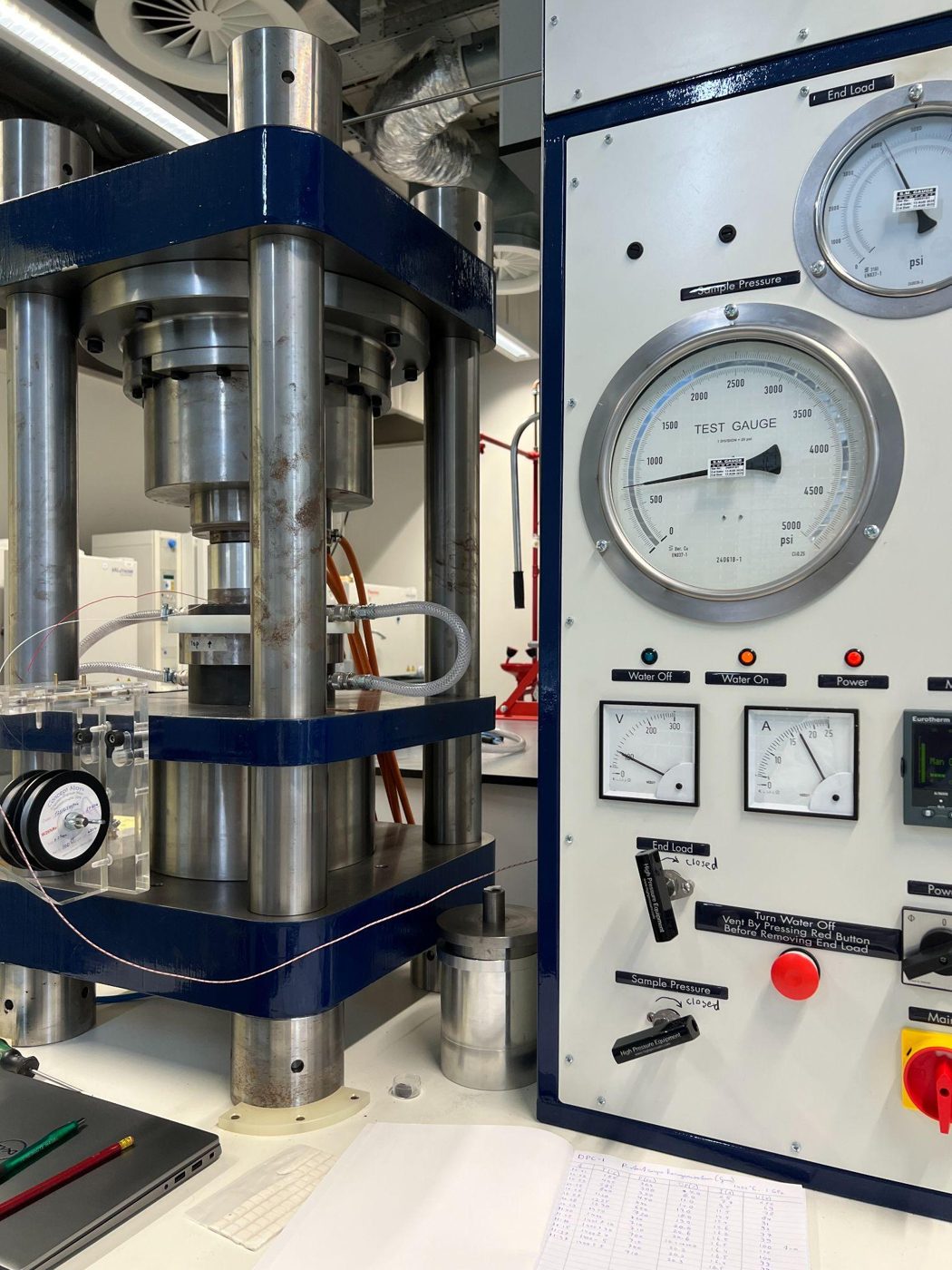
The end-loaded piston cylinder press with its pressure gauges and control panel
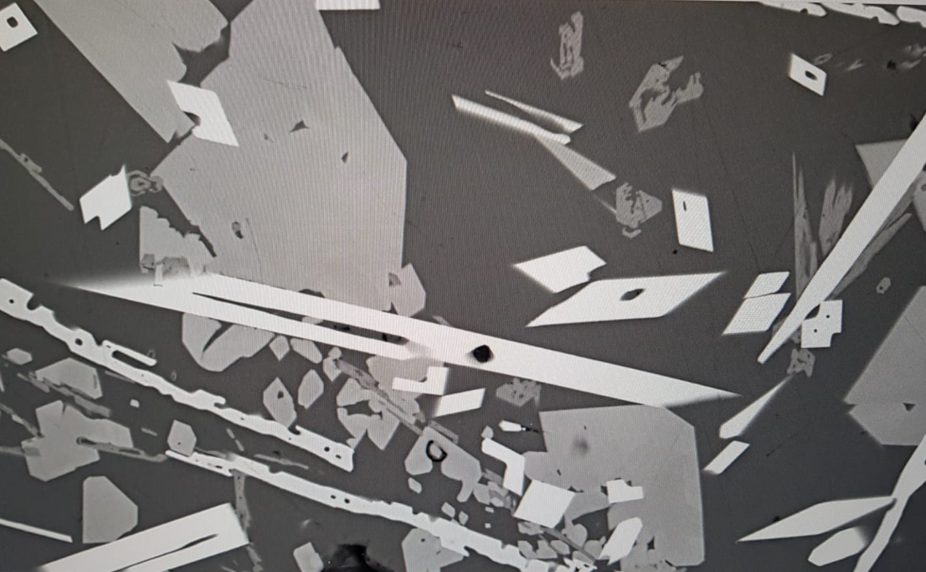
Greyscale electron microscope image showing angular crystals in a fine-grained matrix
Electron microscope image of an experimental sample. caption to confirm

Instrument 01

End-Loaded Piston Cylinder Press

3.5 GPamaximum pressure
> 1600 °Ctemperature
Bristol typeend-loaded design

The end-loaded piston-cylinder press is a high-pressure experimental apparatus used to investigate the physical and chemical properties of planetary materials under conditions relevant to planetary interiors. The Bristol-type design enables high-pressure and high-temperature experiments on geological materials, including silicate rocks, minerals, and metal alloys, up to 3.5 GPa and over 1600°C. The system is suitable for investigating phase equilibria, melting relations, mineral stability, and chemical partitioning under controlled pressure and temperature conditions. It supports experimental studies of planetary differentiation, magma generation, and the evolution of rocky bodies, including Earth, Venus, Mars, and planetary interiors more broadly. Within the planetary materials laboratory, the press provides an experimental platform for reproducing shallow to deep-interior conditions, depending on the planetary body, and constraining the processes that govern their formation and evolution.

How deep does the press take us?

At its maximum of 3.5 GPa the press reproduces the pressure roughly 110 km inside the Earth, almost 300 km inside Mars and most of the way to the centre of the Moon.

Depths are approximate and follow simple interior models of each body. Layer boundaries are schematic. numbers to check
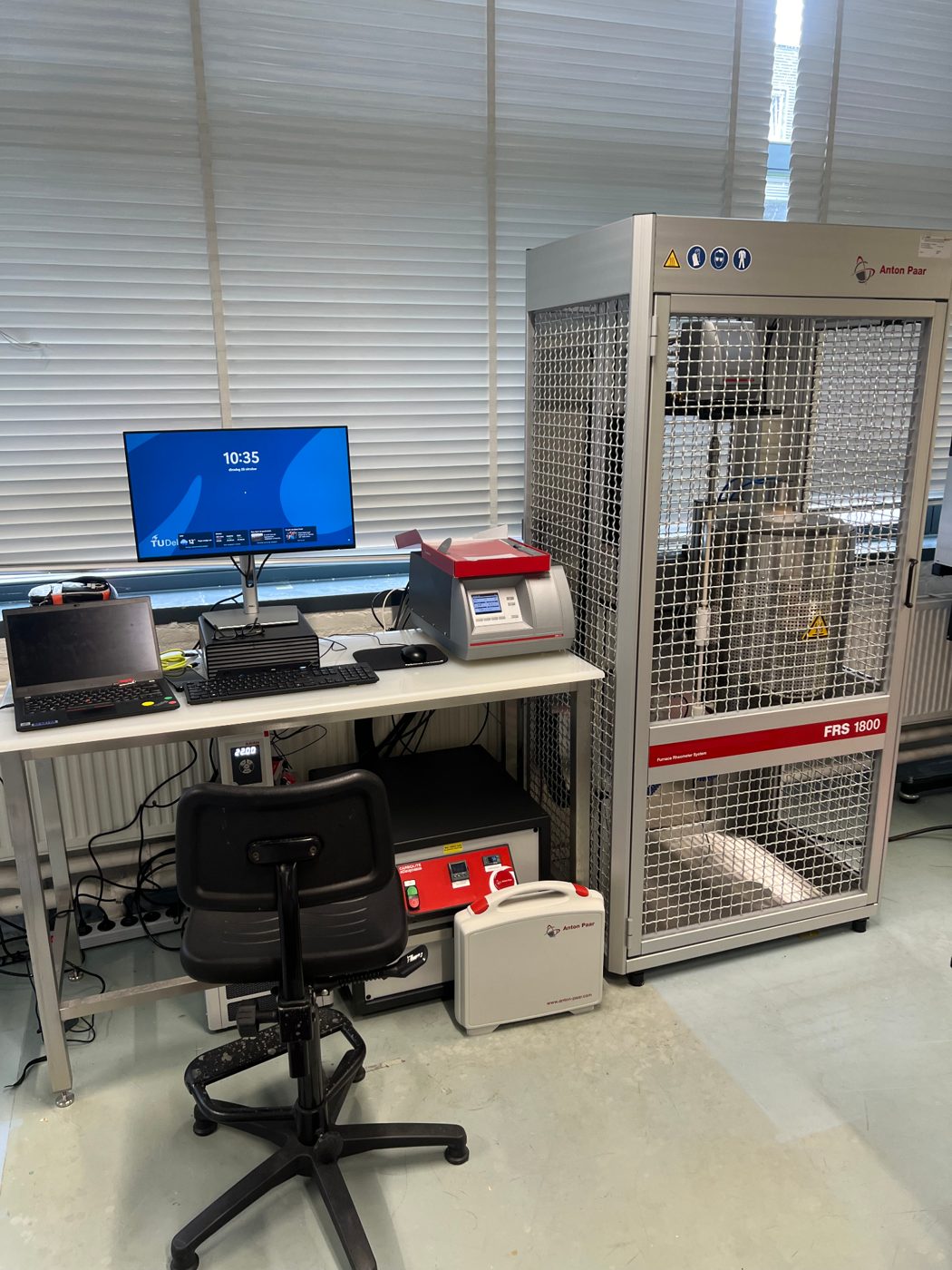
The Anton Paar FRS 1800 furnace rheometer system in its safety enclosure, next to its control computer

Instrument 02

Anton Paar FRS 1800 Gas-Tight Rheometer

1730 °Cmaximum sample temperature
Rotation and oscillationmeasurement modes
Gas-tightcontrolled atmosphere

The Anton Paar FRS 1800 is a state-of-the-art high-temperature rotational rheometer designed to measure the viscosity and rheological properties of molten materials under controlled atmospheric conditions. The system enables measurements at sample temperatures up to 1730°C, making it suitable for investigating the flow behaviour of silicate melts, including planetary magmas, as well as metal, slag, salt and sulfate melts. The rheometer supports both rotational and oscillatory measurements, allowing the characterization of material viscosity and viscoelastic behaviour across a wide range of conditions. Its controlled-atmosphere capability enables experiments using selected gas environments, supporting investigations of the influence of atmospheric composition on melt properties. Within the planetary materials laboratory, the rheometer is used to constrain the rheological behaviour of planetary materials at high temperatures, providing experimental data relevant to magma mobility, volcanic processes, and the evolution of (shallow) planetary interiors.

How does a melt flow on another world?

Viscosity decides whether a melt races downhill or barely moves. The same lava flows more slowly where gravity is weaker.

Speeds are a laminar-flow estimate for a sheet 1 m thick on a 1° slope and only indicate the scale of the effect. numbers to check

Venus Surface SimulatorPhoto coming soonphoto to add

Instrument 03

Linseis STA HP3 TGA-DSC “Venus Surface Simulator”

1200 °Cmaximum temperature
150 barmaximum pressure
TGA and DSCmass and heat flow together

The LINSEIS STA HP3 is a simultaneous thermal analysis system designed to investigate the thermal properties and behaviour of materials under controlled experimental conditions, up to 1200 °C and 150 bar. By combining thermogravimetric analysis (TGA) and differential scanning calorimetry (DSC), the instrument measures changes in sample mass and heat flow as a function of temperature and time. The system enables the characterization of thermal stability, decomposition, oxidation, phase transitions, and endothermic or exothermic reactions. Its high-temperature capabilities make it suitable for investigating geological and planetary materials, including minerals, rocks, and synthetic analogues, under controlled atmospheric conditions. In fact, the hostile conditions at the surface of Venus can be directly reproduced within the set-up. Within the planetary materials laboratory, the instrument supports studies of the thermal evolution and chemical stability of planetary materials, helping constrain processes such as mineral transformations, volatile release, and high-temperature reactions relevant to planetary interiors and surfaces.

Which worlds fit inside the instrument?

The surface of Venus, at about 460 °C and 92 bar, lies well inside the range of the instrument, as does the whole lower atmosphere up to the cloud base.

Venus atmosphere values are approximate, after the Venus International Reference Atmosphere. The shaded box uses the listed maxima of the instrument. numbers to check

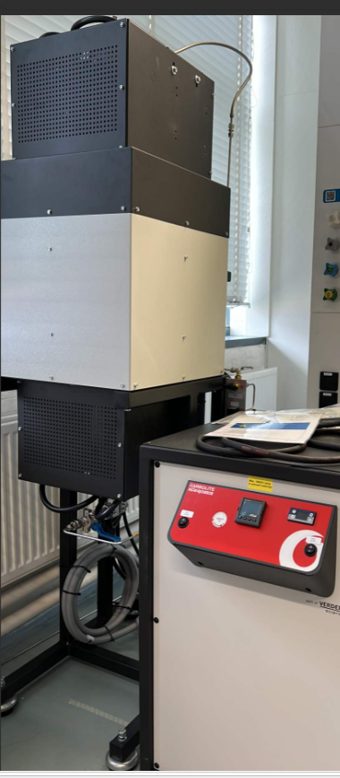
The Carbolite Gero vertical tube furnace with its controller
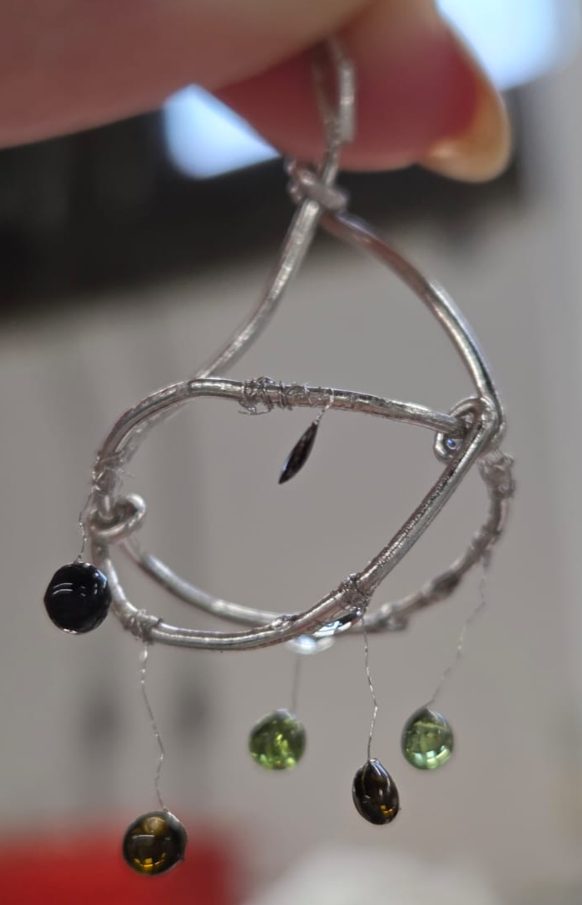
A thin wire loop holding several small glassy beads
Sample beads suspended from a wire loop. caption to confirm

Instrument 04

Carbolite Gero Gas-Mixing Furnace

CO₂, CO, SO₂and inert gases
Oxygen fugacityset by the gas mixture
Gas–melt reactionsat high temperature

The Carbolite Gero gas-mixing furnace is a high-temperature experimental system designed to investigate the behaviour of planetary materials under controlled atmospheric conditions. By combining precise temperature control with regulated gas delivery, the furnace enables experiments under atmospheres with tailored chemical compositions and oxygen fugacities. The system can be operated with a range of gases, including CO₂, CO, SO₂, and inert gases, depending on the experimental configuration. This capability allows for investigating the effects of atmospheric composition and redox conditions on melting, mineral stability, oxidation, reduction, and gas–melt interactions. Within the planetary materials laboratory, the furnace supports experimental simulations of environments relevant to rocky planets, including the CO₂-rich atmosphere of Venus. It provides a platform for studying high-temperature chemical processes, the stability of planetary materials, and interactions between silicate melts and controlled gas atmospheres.

Mixing the gas of another world

The ratio of CO₂ to CO in the furnace sets how oxidising the gas is. Different mixtures match the interiors of the Moon, Mars or the Earth.

Oxygen fugacity is calculated for ideal CO₂–CO mixtures at 1 bar and shown relative to the iron–wüstite (IW) and quartz–fayalite–magnetite (QFM) buffers. Planetary ranges are indicative literature values. numbers to check

Beyond rock

The clouds of Venus and ionic liquids

Between about 48 and 70 km above its surface, Venus is wrapped in clouds of concentrated sulfuric acid. Near 55 km the temperature and pressure are similar to those at the surface of the Earth, which makes this layer a prime target for future atmospheric probes.

Laboratory experiments have shown that sulfuric acid can dissolve nitrogen-bearing organic compounds and, once the excess acid evaporates, leave behind an ionic liquid: a salt that stays liquid over a wide range of temperatures and barely evaporates. In the laboratory we test such liquids under conditions relevant to the clouds of Venus.

Inside the clouds of Venus

The cloud decks of Venus span roughly 48 to 70 km altitude, from about 90 °C at the base to about −40 °C at the top.

Atmosphere values are approximate, after the Venus International Reference Atmosphere. The droplet sequence is a schematic of the process described by Agrawal et al. (2025). text to confirm

Agrawal et al. 2025, PNAS · Iakubivskyi et al. 2024, Scientific Reports · Seager et al. 2026, Life